
Do not disturb
The difference between animals and humans is that the calling of the animals is to avoid tragedy, whereas that of humans is to prevent it

A recurring theme that I return to here is distance. The distance that insulates us from horror. From killing. From torture. From the nefarious effects of the ordinary, everyday things we do. From the things we flush down the toilet.
Flushing

I hate to disappoint you, but Yorkshireman Thomas Crapper did not invent the flush toilet. He patented a number of plumbing innovations, but the flush toilet itself was not invented by him.
To the bombs that our airmen drop on our enemies.

Yesterday, I saw a film that, if you get a chance, you might also like to watch. It’s a French/Belgian production, in French (I played it at 0.75x so as to be able to pick up the dialogue in its entirety—this would have an interesting consequence towards the end of the movie), entitled 38 témoins: 38 Witnesses.
A young woman, Louise, returns from a trip to China to find her husband, Pierre, who is a pilot working for the Port of Le Havre, along with the rest of the neighbourhood, in a somewhat disconcerted state: a woman has been raped and murdered on their doorsteps. The police had conducted door-to-door enquiries but they got no answer at Louise and Pierre’s flat, because Pierre hadn’t opened the door to them.
The police’s enquiries result in a conclusion: no one heard or saw anything. So, they will have an uphill struggle to find the murderer. After a day or two, however, the harbour pilot reveals to Louise that he did in fact hear something and, after a long internal struggle, he eventually presents himself at the police station to make a statement. The prosecutor calls him for an interview and says, more or less, “You say here what you heard. But I have statements from 37 of your neighbours, who say they heard nothing. Either all 37 of them are lying, or you are lying. Which? As long as you don’t sign your statement, that is where the story ends. Once you sign it, it becomes an accusation against your 37 neighbours, and you should be aware of the consequences of that. Will you sign?”
He signs, the police question the 37 others a second time, and get admissions from them: they all heard and saw something; and the state has to consider whether it is going to raise a prosecution against all 38 witnesses. “Against one, yes. Against five, maybe. But against 38? No. What will that achieve?” the prosecutor asks. In effect, he muses that prosecuting one or five people for culpable omission sends a signal to society; but when 38 need to be prosecuted for culpable omission, the omission is already embedded in society, and there is no signal to be sent.
It’s a chilling conclusion. It is a conclusion that we can draw from the quasi-total insouciance of the entire world to the suffering of people around the globe who, we know full well, are suffering and whose suffering, we know full well, our governments could protest against but don’t, for the sake of our national interests.
Louise declares her loyalty to Pierre. Despite bricks being thrown through their window and graffiti daubed on their front door, she will remain true to him, and says so. It is a personal statement of commitment to the man she loves. After all, it is somehow understandable that people hear noises in the night and simply roll over onto their pillows and carry on dreaming. It is somehow understandable, when the police knock on their doors the next day, that they don’t want to be involved. It is understandable that, even though a horrid crime has been committed, we all have our lives to get on with. It is understandable that, if society is rotten, then society must right itself but that that’s not our individual responsibility. All of these blurred perspectives seem to be very sharply defined from the viewpoint of the bystander citizen.
Then, something changes. Louise has dealt with the communal omission of her husband and their neighbours as a distant narrative, one that did not intrude into the relationship between him and her. But she is about to find out exactly what he, and they, experienced that night, first hand, and it will alter her, for ever. One night, the police close the street, and officers take up positions for a re-enactment of the crime. The neighbours are all in their homes, in the company of detectives. An actress emerges from a police car, dons a coat and hurries over to take up position, along with an actor who will play her assailant. The head of the operation gives the green light and the re-enactment commences.
The actress lets out a horrifying, blood-curdling scream. The sergeant looks to Pierre, the harbour pilot: “Like that?” Pierre replies, “No. Louder, and for longer.” The message gets relayed to the actress, who intensifies her performance. Played at 0.75x, the effect is shocking.
We, the audience, hear the whole scene from up in the block of flats. We realise that reports like We heard nothing, we slept through the whole thing, we were utterly unaware just don’t hold water. No normal person could sleep through that horror: scream after scream, long, enduring, piercing the still of the night. Screams you can hear long after they have stopped.
The re-enactment finishes, the police and the prosecutor leave, the barricades are tidied away and the street falls silent. Louise turns to Pierre and says to him, “Je m’en vais. Je te quitte.” I’m going. I’m leaving you. The door closes behind her.
The distance between Louise and Pierre grew proportionally as the distance between her and the murder victim reduced, as a result of the re-enactment. If we could hear the screams of Palestine right now, can you imagine how great the distance would grow between us and our governments?
Distance insulates. And we like to insulate ourselves, against noise, the cold, poverty, economic downturns, vibrations, turbulence. But most of all, we like to insulate ourselves against the suffering of others. Because preventing it … disturbs our sleep.
Je vous quitte.
38 témoins starring Yvan Attal and Sophie Quinton is available on RTBF until 14 October 2026: https://auvio.rtbf.be/media/38-temoins-avec-yvan-attal-3398624.
You need to set up a free account with RTBF, and use a VPN to Belgium.
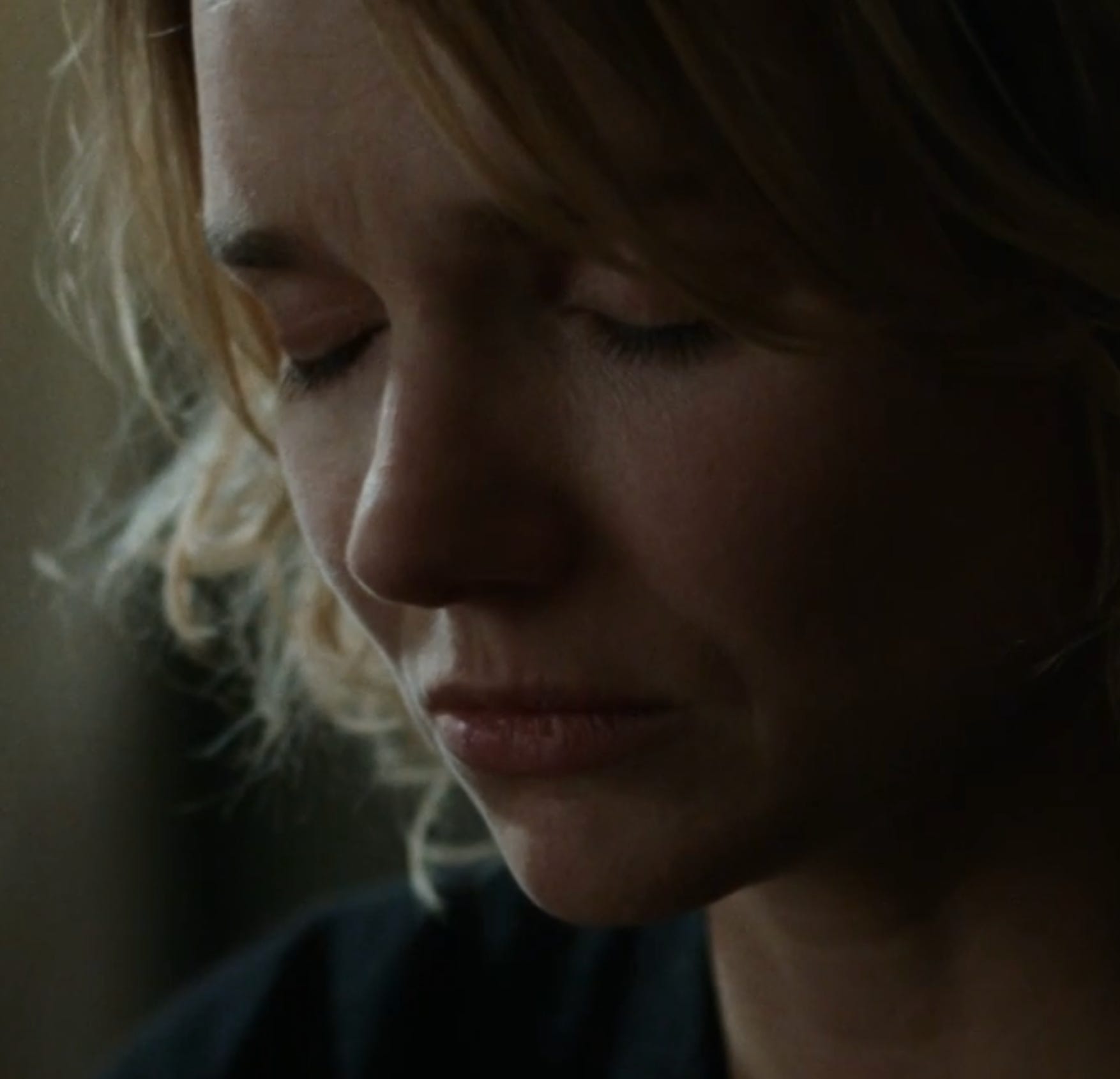
Image: Sophie Quinton as Louise.
Failure to act in the face of acute distress? Not even a phone call? I'd feel outright guilt at that.