
Kings and constitutions
Would you fight for your country, or for what’s right?

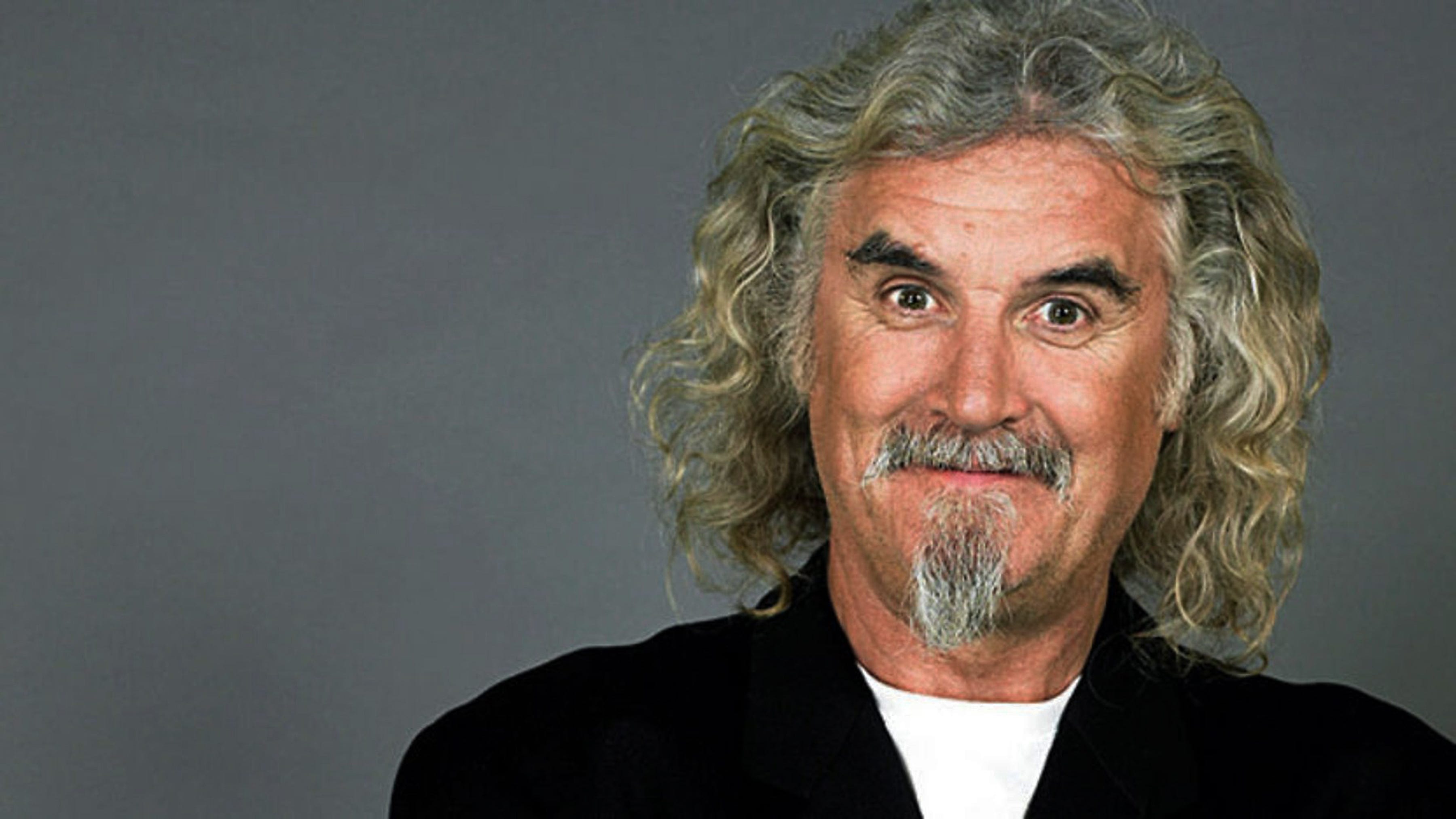
Image: Billy Connolly.
The French maxim of freedom, equality and brotherhood is discussed by me here (https://endlesschain.substack.com/p/liberte-egalite-fraternite-haiti) and has trodden a strange pathway in France itself. Although stemming from Robespierre’s speech, then pamphlet, on the Organisation of the National Guard (the police, basically), it would not be formally adopted by France as its motto until after the Second Empire, late in the 19th century. Haiti, on the other hand, adopted it in 1804, upon the conclusion of its War of Independence with France (and with Spain, Germany and the UK, truth be told). That is pause for thought. Please, if you care, read my analysis, in which I claim that the three elements, and only the three together, can assure a nation its peace. And the one that everyone always forgets is “brotherhood”, because they’re not entirely sure what it is. I think I know.
When I considered becoming a naturalised citizen of Belgium, I visited a neighbour of mine whom I know well and asked him about his service life. He’d been a career soldier, and had been elevated to the rank of major. “When you made the conscious decision to enlist for service in the State’s army you had to contend with the idea that you could be required to sacrifice your life for your country, didn’t you?” His brow deepened and he shrugged: “No more than does every other citizen of this country.” “That,” I replied, “Is precisely why I ask. Will I pledge my allegiance to this country’s constitution and king?” “Well,” he said, “I have no regrets that I did. Will you?”
It says on the first page of my British passport: “Her Britannic Majesty’s Secretary of State requests and requires in the name of Her majesty all those whom it may concern to allow the bearer to pass freely without let or hindrance and to afford the bearer such assistance and protection as may be necessary.” In other words “Treat this guy like one of our own, please.”
It sounds fairly pompous and olde worldely, but it is in fact what a passport is all about. And once that sinks in, it is in fact what citizenship is all about. When they are crowned, the monarchs of Britain take an oath (as, I imagine, do the heads of state of all countries): to uphold the laws of the land, to pass laws that are just, and to offer the protection to their people that their people are entitled to by dint of abrogating their right of self-determination in favour of said head of state. Nice, tight logic: we say they can rule; they say they will rule fairly; we agree; and then we go on holiday. And we have no agreement with Spain’s monarch, so our monarch asks Spain’s monarch to give us there the same protection our monarch guarantees to us when in the UK. And countries that won’t issue us with a visa are countries that refuse this reciprocal “favour”, so we’re advised not to go there.
But, there’s a catch. The king will not stand at Dover and personally protect us from invading marauders. For that he has an army. And when the Spanish sail their armada towards us, he is entitled to say, “Those whom I have promised to protect must now join to protect us all in our hour of need.” So citizenship without subscribing to the notion of needing to serve in the army is a bit of a non-starter. If you’re a citizen, you serve. Russians know this. So did Gérard Dépardieu, who is now a Qatari citizen (or UAE, or wherever): every right portends an obligation.
But why do nation states require us to serve in their armies? Well, the prime argument is that that is precisely the reason nation states exist at all. They define a line on a map, on one side of which we have “us” and on the other side “them”. And if “they” want to come across that line, they need to be friendly (like Spain and the UK are) or to have bigger guns than we have. Or they need to pay. Tariffs, naturalisation fees, and that sort of thing. Money makes the world’s borders porous as well as making it go round.
But, there is more to nationalism—associated with the desire to fight for one’s nation—than just a national border separating them from us. The 1870s were a decade in which nationalism was all the rage. It brought about (in 1866) the unification of Italy. And, in 1871, we had the unification of Germany. By contrast, Belgium seceded from the United Kingdom of the Netherlands in 1830, and in 1877 there was unrest within the Austro-Hungarian Empire, which led to it rebranding as Austria-Hungary, and, thirty years later, to dissolving in tears. So, why did nationalism, as embraced by Dvorak and Smetana et al., lead to the dissolution of a great unified entity like the Austro-Hungarian Empire, but just a few miles away led to the consolidation of small states into a large state, in Italy and Germany?
Well, all politics and geopolitics aside, I think it ultimately comes down to a sense of community. And that is what Robespierre meant with “brotherhood” in a way. Nationalism is good when it fosters community. And, to do that, you really need to draw that border. To define “us” and “them”. You can’t have a community that is, well, everyone. Because that’s only even conceivable once we’re dead. Heaven is likely a community.
Scots comedian Billy Connolly tells a shaggy dog story in one of his recordings which is all about football violence. His punchline is that “There will always be football violence, as long as they are shitting in our shoes, and we are pissing in their Bovril.” We are incapable of community beyond our lived experience and beyond our support for a football club. I feel community with fellow Substackers in foreign countries, but I am not in their country, and I have never met them. But because of our writings, which convey shared experience, shared thought, shared empathy and compassion, shared ideals. I like them, and I think they maybe like me. Nowadays, community has a potential to be built other than within physical community boundaries. But, even then, social media have an inexorable tendency to divide into “us” and “them”. In a way, what Israel is currently busy doing is not just consolidating the Jewish predominance in that country and in surrounding territories, but creating a nation state that is global, even if it has no defined boundary that you can delineate on a map. Once that project has sunk in, people will need to decide which side of that line they stand on and, because it’s not chalked out on the ground, it will be easy to spring from one side to the other. Either that will make everything nice and easy, or it will create mayhem.
Time for an old, if illustrative, joke: after the Second World War, a couple of sappers get tasked with drawing on the terrain the actual new border between Poland and the Soviet Union. They progress well until, working their way through a forest, they discover a house that is slap-bang on the proposed new border. They cannot draw the line through the middle of the house, so one of them suggests to the other, “Let’s knock on the door and let the owner make a choice, between being in Poland or in the Soviet Union!” The other agrees and the two of them knock at the door.
A gentleman opens to their knock and they ask their question: would he sooner be placed in Poland or in the Soviet Union? The gentleman mulls the matter over for a few seconds, before answering, “Poland. I never liked the Russian winters.”
In our brave new world, the householder needn’t choose. He can be Polish one day and Soviet the next. Because community is getting defined differently.
The word “Wales” is related to other geographical words, e.g. Wallonia, in Belgium, and Gaul, a Roman term for France and many other places. And the ubiquity of “Gaul” as a name for places in Roman times comes from the fact that it means “them”, as do Wallonia and Wales. Interestingly, the Welsh name for Wales is Cymru. Guess what that means (in its most basic form). That’s right, it means “us”.
So, back to the point: will I fight for my adopted new country? No, I won’t. As a conscientious objector, I will not fight for anyone’s country. So does that mean I am disbarred from citizenship? Well, until Britain or Belgium calls me up to serve in their armies, they don’t know I am a pacifist, and that is a peaceful arrangement so I don’t plan to disturb it. But if they do call me up, I will cite my obligation in terms of the balance of my rights as a citizen. And that is an obligation to a higher authority than the nation state: God Himself. And they may prosecute me for treason, and chop off my head as they did Thomas More’s, or condemn me to prison and spit on me and feather me, but I will not join their army.
I will defend their constitutions and their kings, but only so far as it does not require me to level the barrel of a gun at another human being. That, too, is tight logic. https://endlesschain.substack.com/p/on-conscientious-objection.

National anthems as propaganda

When I studied German in the German town of Schwäbisch Hall in 1989, I studied, as part of the course work, the German national anthem. Many non-Germans could cite one line of it, which is now no longer sung: Deutschland, Deutschland über Alles. Germany, Germany, over everything.
Ladies and gentlemen, kindly be upstanding for the National Bullshit

It is a part of the Staatsräson of Germany that Israel exists, and that its continued existence should be defended by Germany. So said Angela Merkel, the Chancellor, in 2008. When she visited Israel.

Female, but signed the pacifist pledge at 16, and still adhere to it. I don't believe in borders either, they are dangerous, provoke conflict, and cause heartache for those divided. I trust I would not stand by and watch a child or weak person being attacked, but that I would do my best to prevent it, to stop the harm - but who can be certain of how they would react.