
Oh, to be supplied with misinformation like the ardent readers of city newspapers!
Connect to your flivver for your daily dose

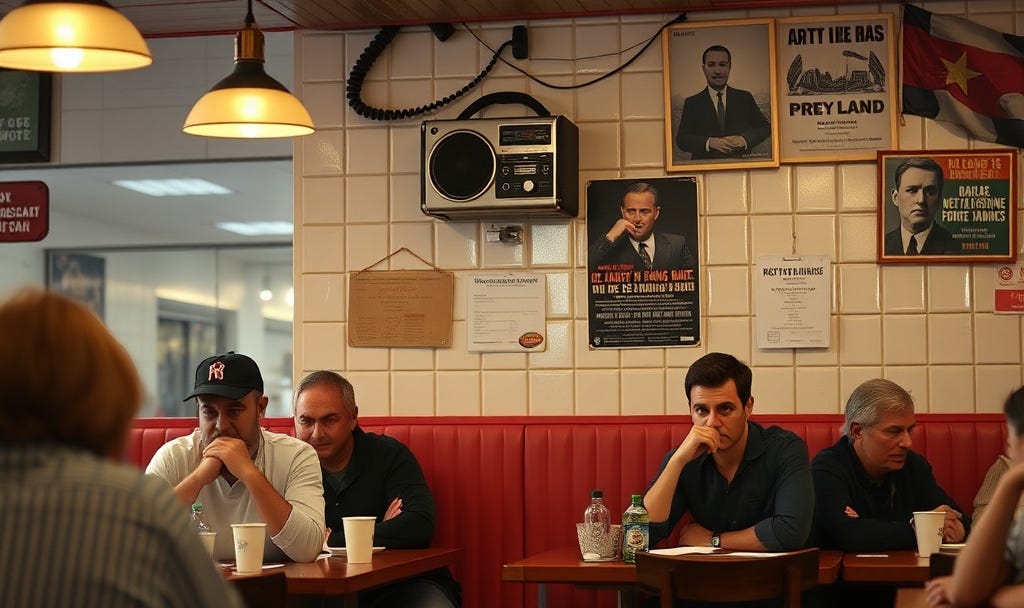
In “Erewhon” Samuel Butler portrayed a society that had achieved a measure of freedom and graciousness by smashing all its machines. The rapid invasion of radio is giving new significance to his fantastic tale. We are informed that one may purchase a radio set for a few dollars, hitch it to the battery of one’s flivver, and distinctly hear London, Paris and Berlin, to say nothing of Newark and Arlington, screaming their various propagandas across the ether. This new mechanism, it would seem, opens to us a life of endless and appalling horrors. One enters what appears to be an innocent and quiet restaurant, and suddenly at one’s ear a tube in the wall begins to emit vapid arguments for a new alliance with some group of international yeggmen, the adoption of the goose-step in common-school curricula, the invasion of Patagonia, the abolition of tobacco, the necessity for a consortium-government for the city of New York, run by altruistic bankers, a proposal for a national bonus of ten billions for railway-magnates and shipowners, or some other enormity. Probably a big factor in the ability of the Russian people to throw off the Tsarist tyranny, was that over four-fifths of them were insulated by illiteracy from the steady current of flim-flam, buncombe, misrepresentation and mendacity that emanates from political government and privilege everywhere. Radio overcomes this insulation, and even illiteracy and physical remoteness no longer protect one. The time is at hand when the most ignorant and isolated peasant will be supplied with as much misinformation on political and economic matters as the ardent reader of the city newspapers.
The Freeman Book; Harold Kellock, 5 April 1922.
In case you missed it:
The middle of Erewhon: and where, exactly, is that?

Erewhon is the title of Samuel Butler’s 1872 satire, in a genre inspired by the 1516 work Utopia by Thomas More (below). It stands for “nowhere”, spelled (almost) backwards.