
On boycotts
What are they and who are they for?

As I write this, more people have “liked” a comment that I put up on Substack than there are subscribers who have liked some articles I’ve written. That has surprised me, because the comment I wrote was, as many of my comments are, based on something that happened to me. I thought it was relevant to the main Note that I was commenting on. Not only did the comment garner “likes”, but some people commented themselves and even challenged me—very politely—on why I had acted the way I had, and that is always a useful discourse, because it is a process that hones down to who we are. There can come a point where one concedes the validity of a counter-argument (or insult, as the case may be) and realises that one has been wrong. But that did not happen to me in this particular exchange. Instead, the contrary occurred: not only was I convinced of being right to have acted the way I did, but it became even clearer to me why I was right. Here is the comment in question:
Two of the challenges to my view came in the following forms.
One contributor asked me where the technology that I use came from or was discovered. The answer, it seems, is Israel. So, the contributor seemed to want to challenge me that avoiding using technology invented by Israel is as good as impossible. That may or may not be true, but if I have a hammer and come to learn that it was made by my enemy, what does it bring to cease using the hammer if I then have no tool with which to join pieces of wood with a nail?
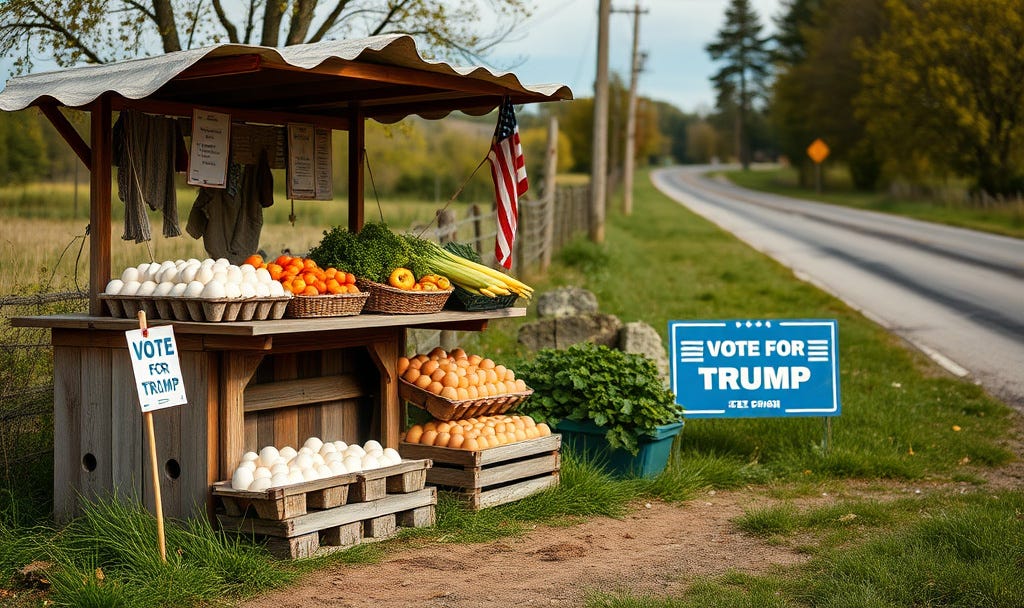
Another contributor revealed that they had previously been happy to stop by at a local farm shop to purchase eggs and vegetables but had stopped doing so one day when the farmer posted a sign vaunting the merits of Mr Trump, the president of the US. In his case, it’s not as if he already owns the “hammer”, but he has to decide whether, in the knowledge that the farmer is his political opponent, he will continue to bring his custom there.
To this we could add a middle case: I have tee shirts that I bought in the time after 9/11. They have stars and stripes on them and words like freedom and liberty and pride USA. If I want to boycott the US nowadays, I could use the hammer argument to continue wearing these shirts. They’re a bit worn now, but still good for gardening. Yes, for gardening, but would I wear them into town? Wearing what I already own does not materially benefit the American makers of these shirts. They already have my money, 25 years ago. But they do announce a certain affiliation, sympathy, liking. One that I no longer cherish. So, I have thrown these shirts away. I wonder whether I would have done so if I’d just bought them, though.
The moral considerations (and they are only moral, not legal) that underpin a decision to boycott are very easily corrupted. By considerations of necessity, or inevitability, or futility, or value for money, or even the fact you were going to throw it away anyway. A recent article in Jacobin criticises random boycotting and appeals to socialists to organise their boycotts in order for them to have true economic punch. I think that’s important, but a personal boycott is also important. For the person.
Twenty years ago, I popped into a mini-market in Bertem on my way home. I often did so, because it was on the road home from Brussels. When I got home, I discovered that something I’d bought for four euros had a label attached to it offering a 50 per cent discount, but it needed to be torn off by the cashier. The cashier in this case had not seen it, so I had not received my discount. I drove the four kilometres back to Bertem with the product and waited in line for my turn and, once I was back at the cash desk, presented the product to get my discount. The cashier said she would need to call the manager, so she did, whilst meanwhile a queue formed behind me. The manager came and gave both me and the discount coupon a somewhat sour look. I added, “Given I had to drive the whole way back here to get the discount, perhaps you would give me the product for nothing?” The manager grunted at the cashier, “Give him his two euros.”
Since then, I have never once stepped over their threshold. Not once in 20 years. I boycotted them, because they weren’t friendly when I pointed out their mistake. Because getting what was duly mine cost me effort and petrol. Because the manager was gruff. Because the cashier had missed the tear-off ticket. No, in the end, because of none of those things. In the end, I boycotted the shop because I no longer want to go into it, and that’s enough for a boycott. I don’t really need a reason. But I do if I want to persuade others to boycott it. And I don’t.
The comment I posted in the linked Note tells Substackers why I decided not to undertake work for an American company. It doesn’t tell them how I re-wrote the Bible, or laid down an Eleventh Commandment. I didn’t realise it at the time, but all I was saying was that in everything we do we should follow our conscience; and, when we do that, there will always be a fellow human who will castigate us for doing the wrong thing. But our conscience never will, because of a forgiving God.
We boycott over Gaza,try and avoid the companies who trade in or with Israel. Exceptions are cans of pepsi or coke, which ease my daughter's bad migraine attacks. Only bought when needed. We check the labels to avoid fruit and veg from Israel, and anything else. You are definitely doing the right thing. It is a matter of moral conscience, simple as that.