
Polishing the silver
And admiring it from afar

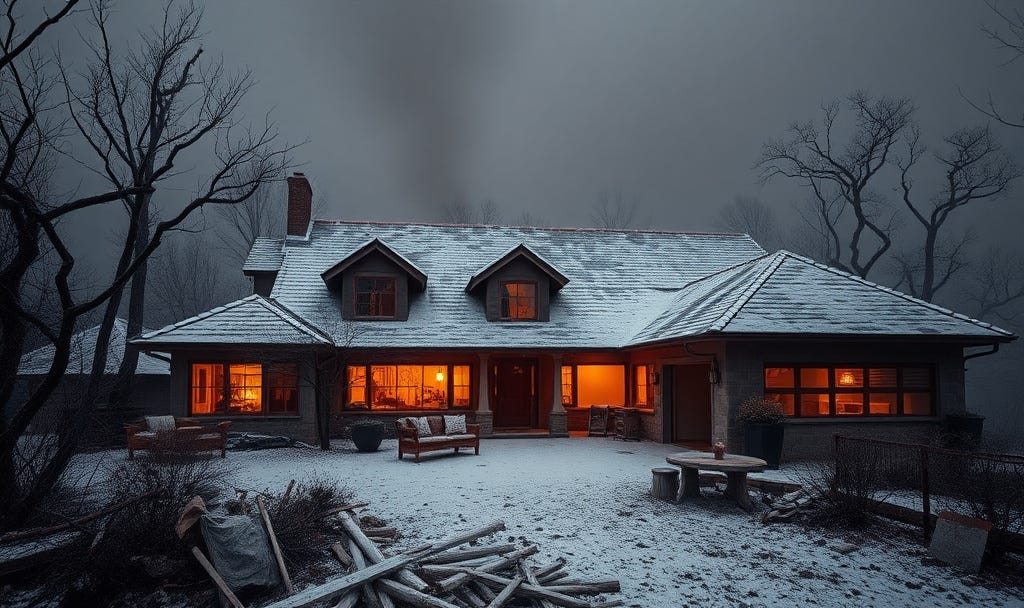
Image: come home to a living fire.
When my father died in 2009, among the items that I cleared out of his home was a box of materials for cleaning silver. Silver wadding, silver polish (gunky stuff that only reluctantly pours—if that’s the word for it—from a dark, elegant-looking plastic bottle with copperplate writing on it) and a tall flagon of silver dip, which smells mildly offensive and probably is. With it, I brought from the house some silver. A candelabra, a honey pot and spoon, a teapot, cream and sugar jugs, mustard spoons and napkin rings. That was 2009.
About three years ago, I sorted all the tarnished silver items onto a tray, looked out the silver polish, and set the ensemble aside for doing the polishing. And last night, I got around to doing it. Polishing silver is a slow process and I’m sure you’ll agree that 17 years is quite slow enough in anyone’s book.
Part of the reason for the delay in slotting silver polishing into my relaxed schedule is the sheer nature of the items being polished. As I worked my way through the five napkin rings—four matching of one type and one that’s engraved with my initials, which was given me at my christening—it struck me how futile the whole operation is. Most of the people who ever come here to eat something hardly know what a napkin is, let alone a napkin ring (we usually tear off a square of kitchen roll and, by the time you do that, a napkin ring really seems like overkill). Then there’s the teapot, cream and sugar, together with their hot water jug. Hot water jug? you will be asking. Yes, well, in the dim, distant past, when you took afternoon tea at a high-class establishment (like my mum’s), they would bring you your tea (loose tea, of course) in the pot, and beside it would be a pot of hot water, so that, if the tea got too strong for your liking or if you wanted a second cup, you had the hot water right there to add as you pleased. Whilst I generally do make a pot if I want a cup of tea at home, any additional hot water will usually come straight from the kettle. I mean, in Germany, a cup of tea consists of a tea bag dunked into a glass of tepid water (three euros fifty, if you don’t mind). If you wanted extra hot water it’d likely cost you another quid. You get no milk, but the sugar’s costed in to the price—no refund if you leave it in the saucer.
Anyway, last night was silver polishing night, and when you leave tarnish on for that length of time, it takes a while to get it off. All of which means you have time to reflect on things—what you’re doing, where silver even comes from, and what its purpose is.
Nowadays, the prime use for silver is guarding against inflation. The silver in my possession was not, apart from one or two items of jewellery, bought by me. It belonged to my parents, to my grandparents, to aunts and uncles of ages past. The fact of owning silver items such as these used to be a mark of status (now, when I produce them to friends, it’s taken as a mark of boasting). My gran was the one who got the job of cleaning it back when, however. And she was very good at cleaning it, because as a housemaid her life long, she had cleaned the silver of other people as well. Silver, therefore, is not truly a mark of status until the status to which you have thereby been elevated allows you to engage others to clean it.
Silver needs to be mined out of the earth, and those who mine it are not those who refine the silver ore that comes out of the ground, or who work that silver into amazing pieces of tableware, or sports trophies, or military medals, or necklaces, or hot water jugs. And they are not the folk who buy these useless items of frippery in order to implant their status in the minds of others. Those who are destined to own silver without ever cleaning it will view it from afar; they’ll admire it arrayed upon a mansion house’s sideboard. They will not touch it, for that is the job of the footman, his hands encased in white non-lint gloves, as he pours the tea into the bone china cup, which the gentry will touch, if only to elevate it to their lips. Anyone who polishes silver has no status, regardless of whether they own the silver or not. And, if they do own it, that invites the question as to what they were thinking when they decided to acquire it.
Early in 2025, Los Angeles, a little-known location in the American state of California, was caught in the furore of wild fires. They consumed twelve thousand homes covering an area three times the size of Manhattan (according to one newspaper, which can otherwise be expressed as three times 33.59 square miles, or +/- 100 square miles, which is somewhat easier to comprehend. A bit, anyway.) Some of the firefighters who battled these blazes were incarcerated persons. They came from the state’s penitentiaries to don the uniform of a firefighter and risk their lives to save the mansions of the rich. They failed in 12,000 cases.
The deployment of incarcerated persons, at a daily wage of ten dollars, was a matter of some controversy. Why could they not be paid the same as regular firefighters? Were they not incurring the same risks as these professionals? Many volunteered for firefighting duties because it allowed them to prove their macho credentials. Or they could contribute something back to the community they had harmed, for which they’d been sent to prison in the first place (I wonder if they excluded arsonists when they called for volunteers?). Or the volunteers were just glad to have some valued activity to break the monotony of prison life.
But there’s another controversy before we even arrive at the controversy surrounding the deployment of incarcerated persons on firefighting duties, and that is the controversy of how incarcerated persons end up being incarcerated in the first place, and, perhaps more pointedly, how much white collar crime goes undetected, uninvestigated and unpunished. It is not wholly disingenuous to posit that American criminal justice is conceived at least in part to precisely provide a pool, dans ce cas de figure, of cheap volunteer firefighters when the need arises.
The only constructional feature of actor Anthony Hopkins’s Los Angeles home to survive the Eaton fire was the chimney stack. I don’t know whether that’s reassuring (given how chimney stacks are indeed designed to withstand fire) or some kind of metaphor for recreational drugs. I think Mr Hopkins was a fine actor; I don’t know if he took recreational drugs. But I know for a fact it wasn’t him spraying his home with water in an endeavour to save it from the flames. The U.S. has five per cent of the world’s population and 25 per cent of the world’s incarcerated population. It may have a tad more crime than other places, because it’s a consumer society that encourages want and desire, so that those who don’t have tend to want and desire things that others do have. But American prisons are not there to punish as much as to provide a virtually unpaid workforce. They work in the kitchens and libraries of these institutions. They sew mailbags, and they fight fires and they do much, much more. The wealthy construct houses and, if they burn, it’s the incarcerated who douse the flames. Just as it is the wealthy who put miners, foundrymen and artisans to work to produce silver wares that the wealthy themselves will never touch, but only instruct their minions to render pleasing to the eye.
In the end, the only true value impressing itself on me in polishing these silver items after such a long time is to flog them at the flea market; likely to someone who believes they are worth them.
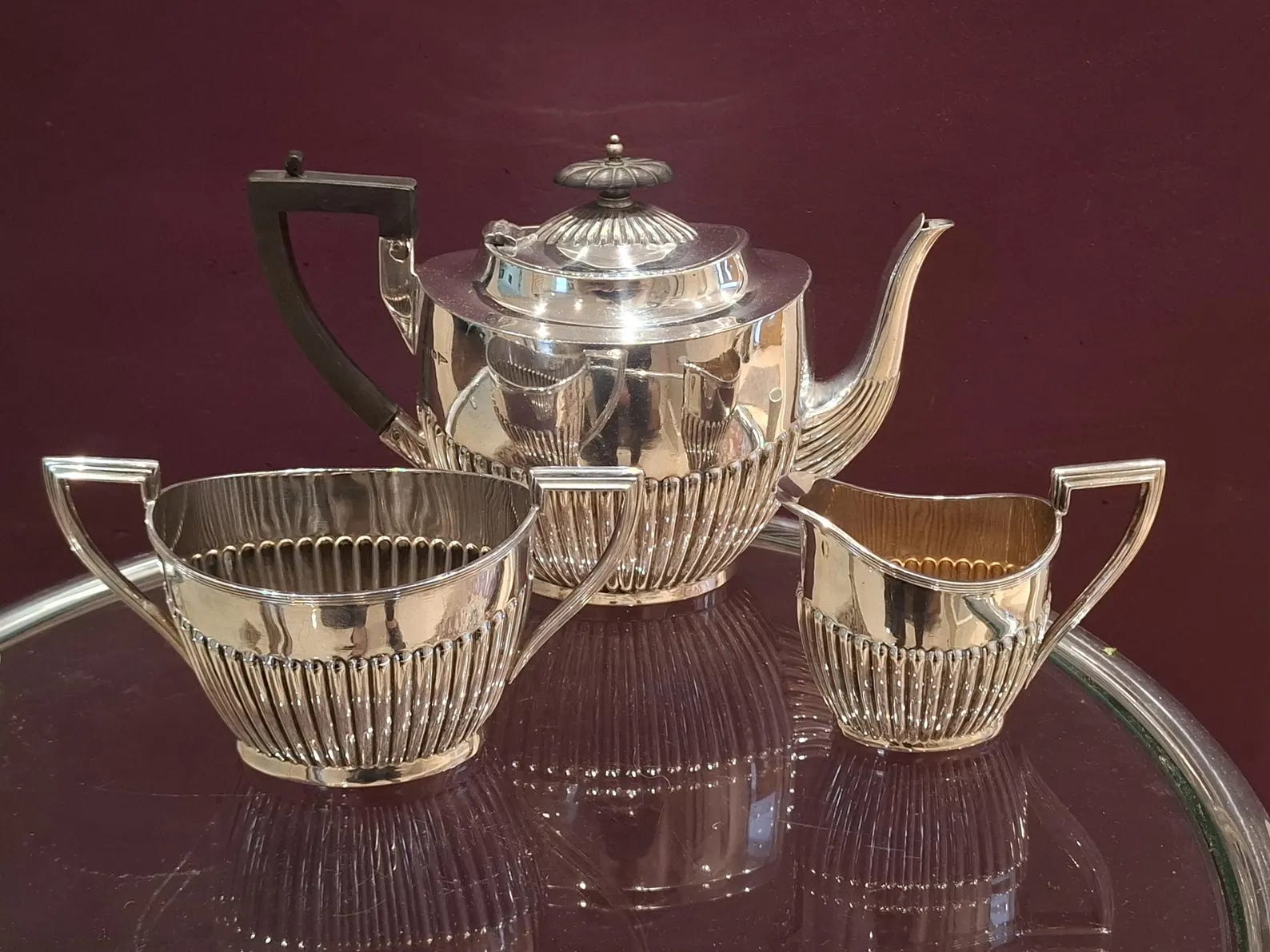
Image: Hey, ho, silver lining.
I too have a silver napkin ring, but, alas, not polished for a long time. I did polish it once (I think). Christening present of course, and as I turned 78 on 31st May my memory may be unreliable about the polishing! I don't use it, no napkins......but I certainly remember the smell that silver polish gave off. Enough to bring tears to your eyes!
You managed to show us how everyday objects carry heavy histories of class and exploitation. Thank you for sharing