
Cheating the doctors
Or thanking the Lord?

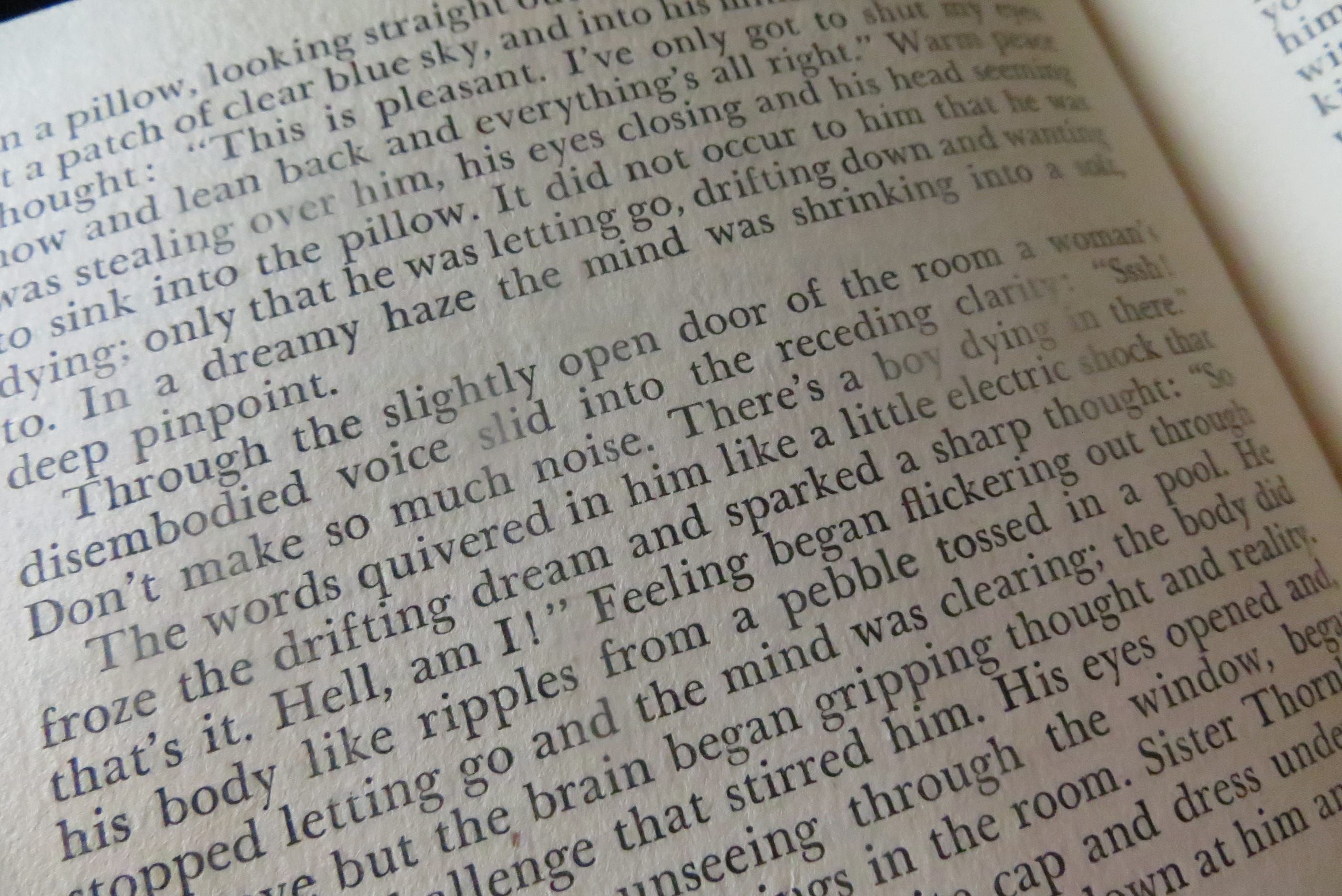
Image: Paul Brickhill’s biography of Douglas Bader, Reach for the Sky.
About 10 or so years ago, someone I didn’t know directly in the amateur theatre circles I frequented at the time was reported to me as having cancer, and three months to live. In 2019, that same person—still living—asked me to be in a play he was directing and invited me to a lunch at the other actor’s house in order to discuss the project.
In one of his opening lines at that lunch, he referred to his cancer. He said, “You know that I cheated my doctors?” First, I found that bizarre, since his medical condition had absolutely nothing to do with the play we were discussing. Second, I have to confess that I was caught in a quandary. This was the first time I had ever actually met, shaken hands with, and spoken directly to, the fellow. Of course, I knew what he was referring to. But should I reveal that his medical history had been common parlance at the time—as if he were some A-list star? Or should I feign ignorance and leave it up to him, to reveal so much of his medical history as he felt appropriate, directly to me? I decided to take a sardonic tack, and replied, “Oh, you mean you didn’t pay their bills?”
He then informed me about his previous diagnosis. I mused a little over that expression I cheated my doctors. Clearly, he didn’t regard the doctors as having cheated him, nor having cheated the diagnosis that he, and he alone, had presented to them for them to cure. It’s almost as if when a doctor tells you you have three months to live, he’s unworthy of the title if you live four months.
What he didn’t reveal to me is the pain and difficulty he must have gone through in terms of the treatment he underwent in order to vanquish the disease. Like the salient moment in Paul Brickhill’s biography of Sir Douglas Bader, Reach for the Sky. Played in the film by Kenneth More, Bader lands in hospital after a terrible 1931 plane crash caused by him showing off: he attempts some aerobatics for a dare in a Bristol Bulldog and cartwheels when his wing tip touches the ground. His prognosis is grave, but from beneath the bandages, he overhears a sister chide some colleagues who are joking in the corridor outside his room: “Ssh! Don’t make so much noise. There’s a boy dying in there.” The ever-obstinate Bader replies in his own head, “So that’s it. Hell, am I!” Douglas Bader may have proved his doctors wrong—he would later prove to be a human conundrum when he was admitted by the Air Ministry as fit for flying while in receipt of a 100 per cent disability pension, to play a pivotal role as a fighter pilot in the Battle of Britain—but I doubt he ever regarded himself as having cheated them. Doctors know psychology and sometimes they may encourage a patient’s recovery by setting down the seemingly impossible goals he needs to achieve for survival.
It seemed strange to me that, being hale and hearty, this theatrical fellow made great play of his recovery, as if it ... what? Proved him to be an unassailable titan? Or just that he had been bloody lucky and—so it would seem—not really that grateful to his doctors? In the end, I declined the role he had offered me.
Cancer is a dreadful disease, and like any ailment it poses its difficulties for both sufferer and sympathetic onlooker. I recall the final scene of I Could Go On Singing, the 1963 film in which ex-spouses Dirk Bogarde and Judy Garland do battle with Garland’s demons, Bogarde challenging her to vanquish them to the point of drawing her anger. And Jack Klugman following up with a dressing-down in the theatre. Sometimes one needs to have the courage to precisely not be sympathetic to the sufferer, in order to generate the courage in them that will pull them through. It was Garland’s last screen appearance before her suicide in London in 1969. The film was fictional, but it was all about her. Bogarde scripted that final scene himself.
I’ve lost a friend to cancer, who accepted his fate with equanimity and dignity, non-believer to the end. Yet I hesitate to write that sentence: I knew someone who died of cancer. As if that bestows upon me some mark of heroism. No, I wasn’t the hero in Gé’s death. He was.
Death by cancer is when cells foreign to the body are created in it and take it over to the point of death. Whether they arise spontaneously or come from the things we introduce into our bodies from chemicals and medicines and inoculations and other things we touch, inhale, ingest all affects the effect they will have on us. What the doctors do is deal with it best they can. Just how, in that task, they can even conceivably be cheated is a little beyond my comprehension, except perhaps as an expression of ingratitude. On the occasions when doctors saved my life, I thanked them. I didn’t revel in cheating them.