
Self-determination isn’t based on what’s right and wrong
It’s based on what looks right and what looks wrong

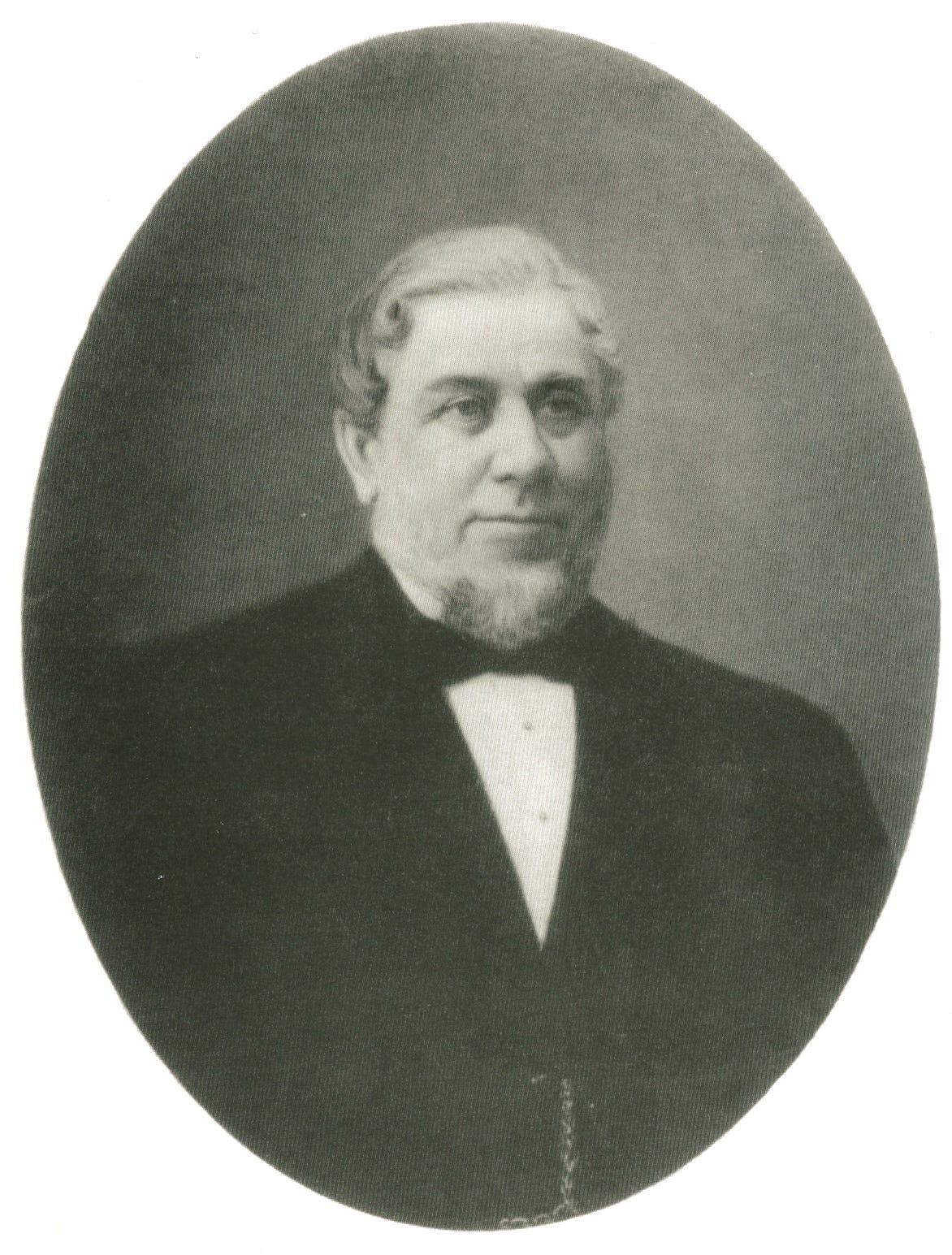
Image: John Hughes (1814-1889), the Welshman from Merthyr Tydfil who founded the city of Donetsk.
Olena Kryzhanivska posted this and I replied.
“If you had to vote in a referendum—whether to give Donbas to the Russians to stop the war, or refuse and continue fighting—what would you choose?” I asked my mom.
“Do you understand,” she replied, “that if we give up Donbas now, they will come and take us all? Right now, you go to the supermarket—there’s music playing, people are shopping for New Year’s dinner. Imagine all of that ending.”
And this is a woman who has been living under drones and missiles for four years already.
I find the Ukraine/Russia conflict a difficult area. I invited a group of friends to a barbecue in May, and they ended up shouting at each other about this very topic. None of them is Ukrainian or Russian. The two sides would not compromise, and while one side understood my equanimity, the other side was more strident: he offered his apologies to me, privately, but refused to offer them to his co-debaters.
That makes talking about things like the Russo-Ukrainian War very hard because, if you see even a chink of fault on the part of the side you support, then the fault just gets erased by polemic and dogma. I wrote about the May argument here. And now I’m writing about another one, below.
Hallo, Olena.
Your mother has the nerves of a Ukrainian. She is Ukrainian. I would expect to hear nothing less from any Ukrainian. She valiantly defends Ukraine’s right of self-determination. And self-determination is a right that I laud. But, the right of self-determination is a pliable and malleable concept.
When Dominion status was denied Rhodesia, it declared itself independent. Dominion status had been made dependent by Harold Wilson on the status of blacks in what is now Zimbabwe. The Rhodesia Front short-circuited that: its right of self-determination trumped the right of Britain to rule it from London.
When Ireland sought self-determination, Britain complained that the Protestant north wanted to remain in the union, and so Ireland was split, to placate the Catholics in the south and the Protestants in the north. The complaint was that the Protestants in the north had been implanted into Ireland by William of Orange precisely to outnumber the Catholics. So the split, which was according to the will of the people, was done anyway regardless of the fact that the people whose will was followed had been so-called “artificially implanted”, albeit 300 years previously.
Now, Luhansk and Donetsk are predominantly Russian-speaking oblasts and some Ukrainians I have spoken to say that that stems from the fact that native-speaking Ukrainians have been ousted from the areas.
So, should a referendum hinging on the principle of self-determination be conducted:
on the basis of the people who live in the region who want to rule themselves (or be ruled by someone else, like Walloons who want to be ruled by France) or
should it be based on what the will of the people would have been before the demographic changes that have been “artificially imposed” (e.g. Ireland, prior to the Scots who settled there after the mid-17th century)?
Ukraine declared its self-determination in December 1991. But the Hungarian-speaking minorities and the Russian- and other-speaking minorities: do they have no right of self-determination?
Obviously not everyone can exercise a right of self-determination. I cannot declare my house to be my own kingdom. Because the police would come and arrest me, with guns. Maybe my village could assert its self-determination, but I think the federal government has bigger guns that we could muster. Maybe my province, perhaps that’s feasible.
What has happened in Ukraine is that Ukraine asserted its self-determination and Russia said, “No, you don’t. And we have bigger guns.” That’s what they say and that’s what they have said since 24 February 2022.
Vlad Beliavsky, a Ukrainian philosopher, said once, “What is Putin going to do? Kill 40 million Ukrainians? Because that’s the only way he will win.” Beliavsky is a pacifist, and sees the extermination of his country as the only way that the war can end. But there is another way, I can assure you: killing 144 million Russians.
So, the two questions, to which I have no answers, are:
How many Ukrainians and/or Russians must die to end the war? and
If I am unreasonable in asserting my own right of self-determination over my house, and Ukraine is reasonable in asserting its over Ukraine, how reasonable or unreasonable is Donbas in asserting its own right of self-determination over Donbas?
I do not believe that the answer to question (2) depends on what is right and what is wrong. No, it depends, as I hope to have shown you, on what looks right and what looks wrong.